The Manila issue
Landing in Manila and Still Getting a Day Out of It
What to do with your first hours in Manila, hour by hour: airport beds, the transit tour, how much of Intramuros you can still reach, and what it all costs.

By Mariana FonsecaIntramuros walls to the last ferry out
Ninoy Aquino International sits under nine kilometres from the oldest street in the Philippines, and on a clear descent over Manila Bay you can usually see both at once: the container cranes and the seawall on one side, the low stone rectangle of Intramuros where the Pasig River meets the water. The distance is short and the traffic is not, which is why so many visitors write off their arrival day before they have even cleared immigration. Plan the first twelve hours around the clock rather than a wish list, and you land with a day still in your hands.
Read the clock before you read the map
Manila has two hard rush hours, roughly 7am to 10am and 4pm to 8pm, when EDSA and Roxas Boulevard set solid. Outside those windows the run from the airport to Intramuros takes 25 to 35 minutes. Inside them the same nine kilometres can take 75, and paying more does not change it. Every sensible arrival plan in this city is built backwards from that one fact.
The first decision, then, is which of four arrival bands you are in.
Land before 11am and you have a genuine full day: a cycling or walking tour of the walled city, a museum, an early dinner, and a normal bedtime that resets your body clock in one move rather than three.
Land between midday and 4pm and you have the walled city and nothing else. That is enough, because the fort at the river mouth stays open into the evening.
Land after 7pm and stay on the bay side of the city, in Pasay, Parañaque or Newport City. Eat well, sleep, and start properly in the morning. Crossing town at that hour buys you a view of taillights.
Land after midnight, or with a connection under ten hours, and you should not leave the airport perimeter at all.
NAIA's terminals catch first-timers out. They are separate compounds, not wings of one building, and moving between them in traffic can take longer than reaching Intramuros. If you have a domestic connection from a different terminal, set aside an hour for the transfer and stop planning anything around it.
Plan your Manila trip
Live prices from our booking partners.
Free cancellation on many rooms. We may earn a commission when you book.
A shower and a flat bed without clearing the perimeter
The Wings Transit Lounge (NAIA Terminal 3) is the only place at the airport where you can sleep flat and shower without committing to the city. It resumed full operations in July 2026, so any write-up telling you it is closed is out of date. Rates run roughly PHP 1,500 to 4,000 for a 7.5 to 15-hour stay depending on whether you take a capsule or a private room, and both walk-ins and non-flying visitors are accepted, which is useful if you are meeting someone off a red-eye rather than flying yourself.
The booking mechanics matter for parties. Capsules are sold per person, family capsules and family rooms sleep small groups, but there is no block-booking desk: each bed is reserved individually, from 24 hours to 60 days ahead. For six people on the same flight that means six separate reservations, ideally made the evening you book the flights, not on the day.
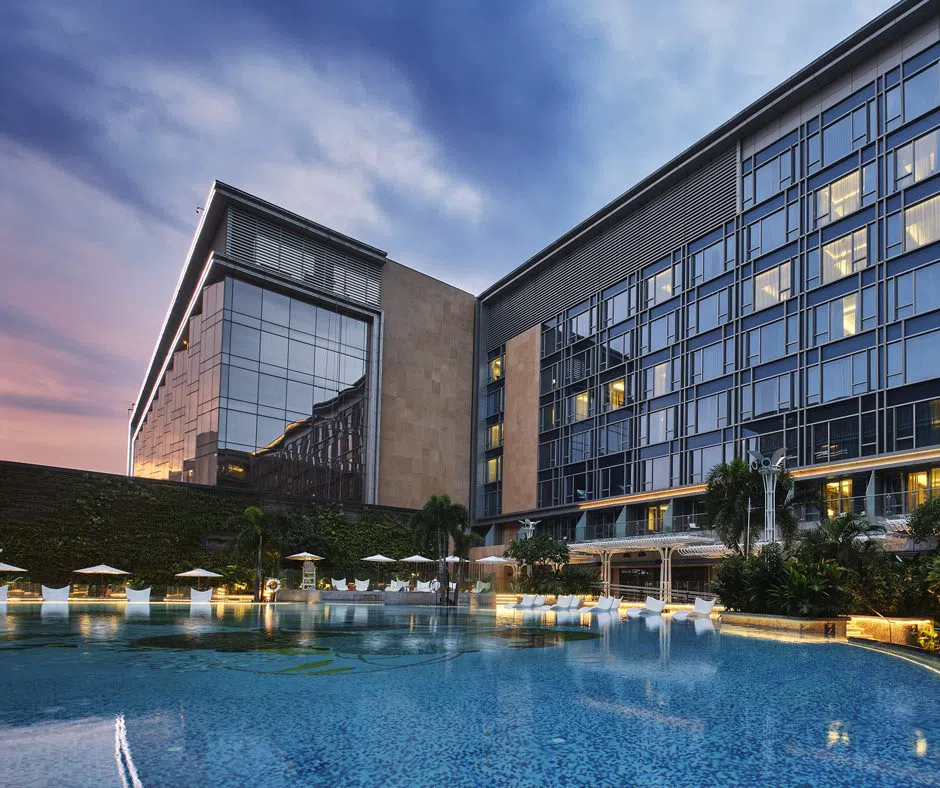
Newport World Resorts (Newport City, Pasay) is the other half of the answer, and it carries the single most useful fact for a bad arrival time: you can walk from Terminal 3 to a bed, a hot meal and a bar without ever getting into a taxi. It is a complex built for volume, with more than fifty restaurants, large hotel blocks and the Newport Performing Arts Theater, all of which take group bookings. Meals run PHP 400 to 1,500, rooms PHP 5,000 to 14,000. Walking through costs nothing, so even a five-hour layover can be spent over a proper dinner rather than in a departures hall. The casino floor is 21 and over, and ID is checked at the door.
When the layover is the whole visit

If your connection is long, the DOT Transit Tour Program (NAIA Terminal 3) removes the two things that sink improvised layover plans: the immigration queue and the traffic gamble. It launched in January 2026 and has been expanded since, and it runs one coach per departure with a guide, entrance fees, insurance and a police escort included, at about USD 50 per person for a four-hour tour. You need a layover of eight hours or more, and either visa-free entry or a valid visa.
There are two routes. The morning heritage run covers Intramuros and the National Museum. The afternoon run covers the Pasay resorts. For anyone seeing the Philippines for the first time, the heritage route is the better use of the hours by a wide margin. The trade-off is honest: it is a coach tour, with a fixed pace and fixed stops, and you return to the terminal when the guide says so rather than when you feel finished. That constraint is what makes it work on a layover, because nobody has ever missed a flight over a police-escorted coach running thirty minutes late.
Three hours inside the walls
Intramuros was laid out in 1571 as a walled Spanish town at the mouth of the Pasig, and it is still a grid you can cross on foot in under an hour. What you are looking at is largely reconstruction: the Battle of Manila in 1945 flattened almost everything inside these walls. Knowing that changes how the place reads.
Bambike Ecotours (Intramuros) is the fastest honest way to see it when you land with half a day. The three-hour Intramuros Experience costs PHP 2,200, about USD 19.50, and covers eight sites with entrance fees included; a shorter express tour starts from around USD 12.50. The bicycles are bamboo-framed, there is a sidecar for anyone who cannot ride, and any departure can be made private for the whole party for roughly PHP 3,000 extra, which is worth it for a family who would otherwise be paced by strangers.

Fort Santiago (Intramuros) guards the river mouth and holds the cell where José Rizal spent his last night in 1896. Entry is PHP 75, or PHP 50 for students, seniors and PWD. It is open-air and unticketed by size, so walk-in groups are fine, coaches park on Santa Clara Street, and guides wait at the gate. Crucially it stays open until 10pm on weekdays with last entry at 8pm, which makes it one of the very few real sights a late-afternoon arrival can still reach.

San Agustin Church and Museo San Agustin (Intramuros) is the oldest stone church in the Philippines, completed in 1607, a UNESCO World Heritage site, and the only church inside the walls left standing after 1945. The church itself is free; the museum is PHP 200, or PHP 160 concession, and welcomes groups. Two warnings. The museum is closed Mondays and Tuesdays, so check the day before you build an itinerary around it. And touring stops entirely during mass and weddings, which are frequent on Saturdays; if you arrive mid-ceremony you wait, or you come back.
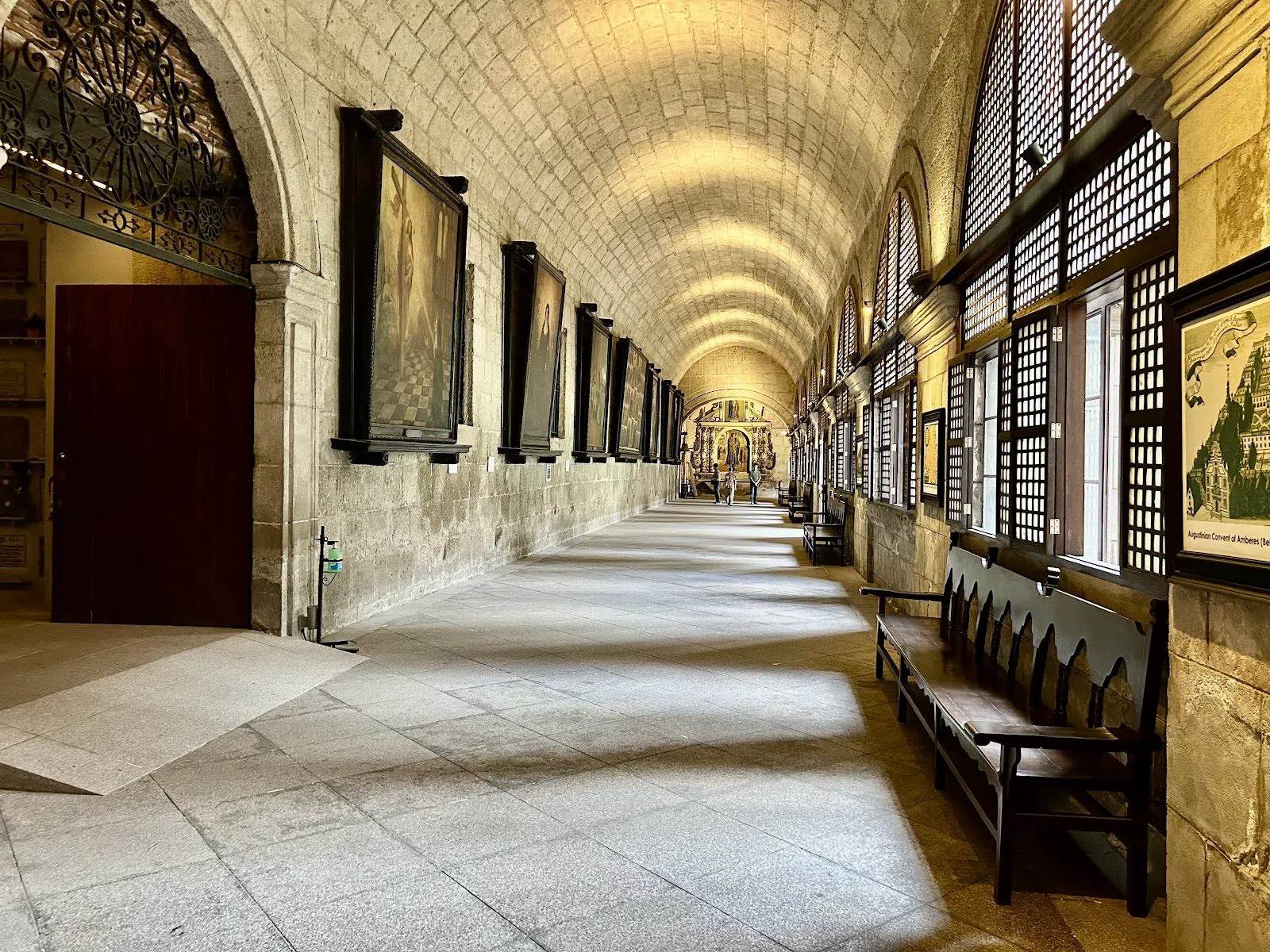
Casa Manila (Plaza San Luis, Intramuros) is thirty focused minutes that explain how the walled city actually lived, room by room. Entry is PHP 75, PHP 50 concession, and it is closed Mondays. Small groups walk in without trouble, but the staircases are narrow and large parties get split at the door, so it suits a couple and frustrates a coach.
Where to put the first night
Sky Deck View Bar at The Bayleaf Intramuros has the best-placed sunset in the historic core, looking over the walls and the bay. Book the 4pm first seating; the sunset tables go first and they do not hold them. Dress is smart casual, cocktails and beers run PHP 300 to 500, mains PHP 500 to 900. Groups are fine, but a party of ten arriving unbooked at 6pm will be standing. It sits on top of a hotel, which makes it a sane first-night base: you can be at Fort Santiago on foot the next morning before the heat arrives.
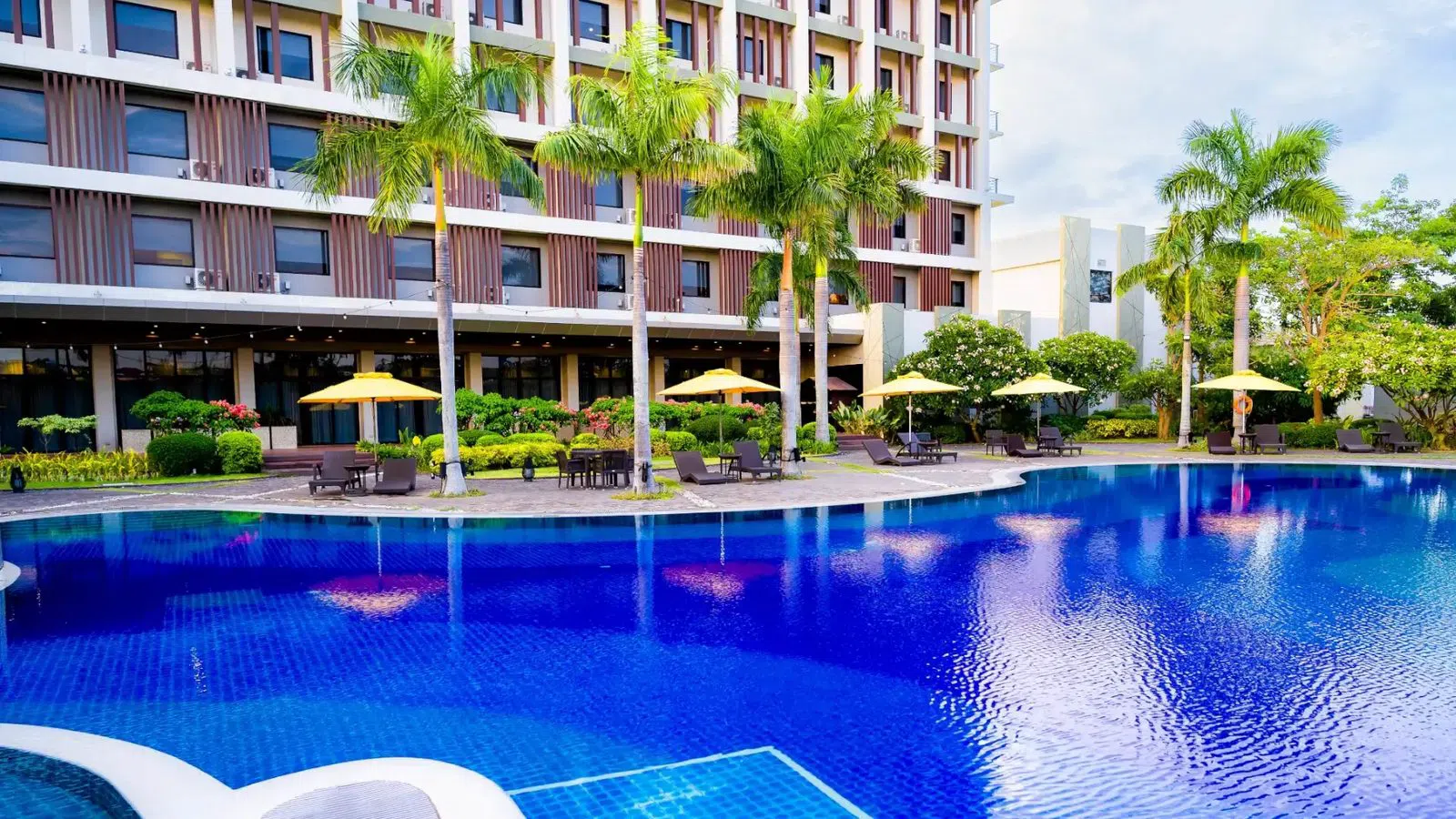
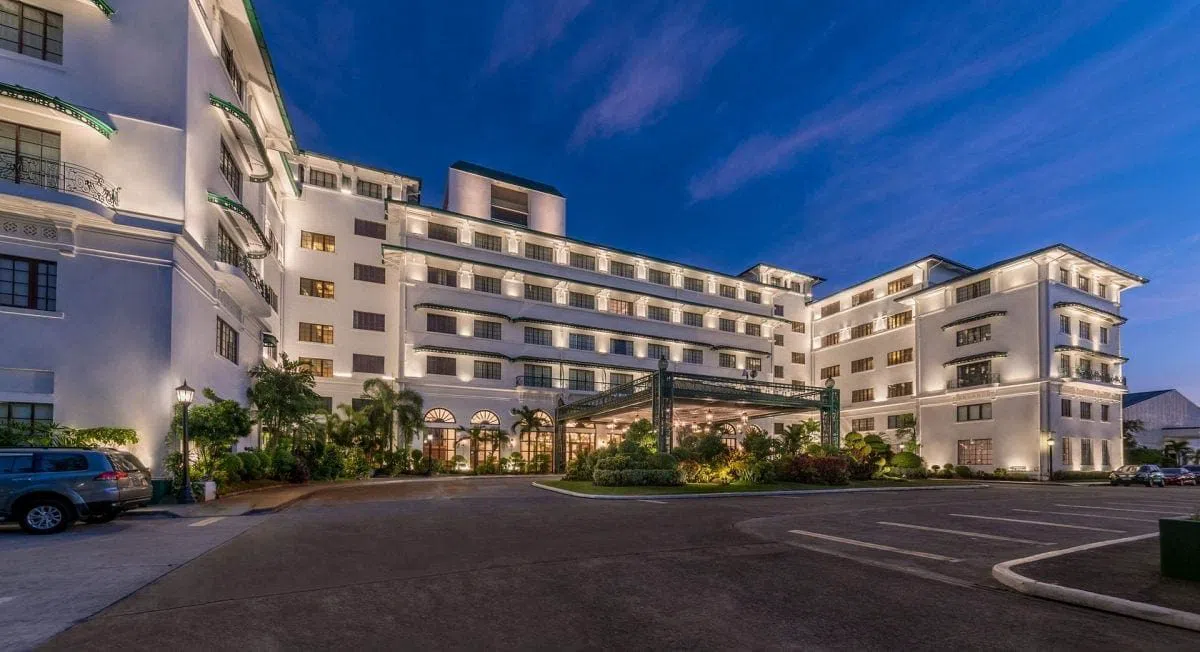
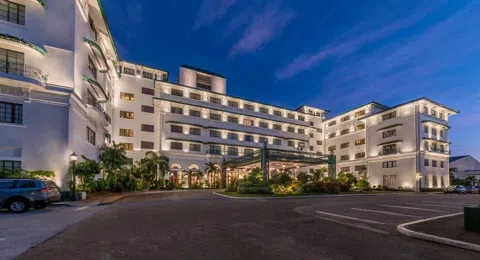
The Manila Hotel (Ermita) is the grander version of the same logic. Opened in 1912, it has 515 rooms and six restaurants and handles groups routinely; rooms run roughly PHP 8,000 to 15,000. You do not have to stay to use it. The lobby and Cafe Ilang-Ilang are open to non-guests, and lobby coffee or afternoon tea costs a fraction of a room. It is a ten-minute walk from both Intramuros and Rizal Park, so a first-night booking here converts jet lag straight into a morning of sightseeing on foot. If you want to compare the wider spread of bases, the Manila hotel search is the place to do it; the only variable that really matters on night one is which side of the traffic you sleep on.
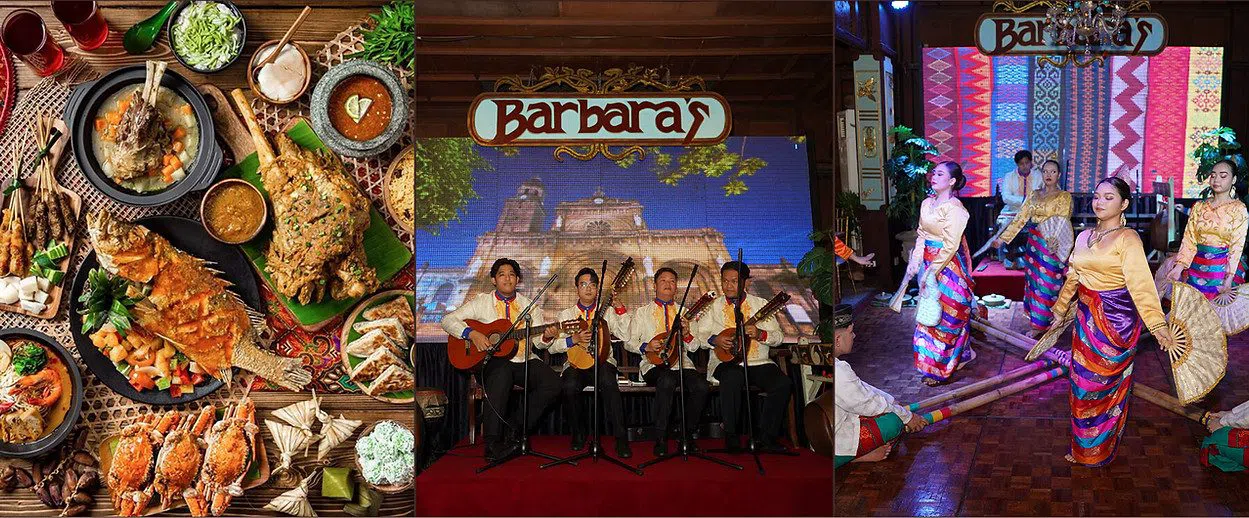
For dinner, Barbara's Heritage Restaurant (Plaza San Luis, Intramuros) runs a buffet with a cultural show at PHP 1,000 to 1,500 a head: lunch buffet from 11:30am with the show at 12:15pm, dinner from 6:30pm with the show at 7:15pm. It is one of the few rooms in Intramuros genuinely set up for groups, and if you want seats near the stage you reserve ahead. Be clear-eyed about what it is, an unapologetic tourist set piece, and good value as one. Couples after a quiet meal should eat somewhere else.
An arrival that lands too late for the old city
When the wheels touch at 9pm, Okada Manila (Entertainment City, Parañaque) is the easiest evening in the city. It is about fifteen minutes from the terminals, the fountain viewing area is free and open to non-guests, and the fountain runs hourly from 6pm. Rooms start around PHP 9,000, meals run PHP 800 to 2,500, and the hotel, restaurants and theatre all take large groups. The casino floor is 21 and over. For a family landing tired with children who need to be outdoors and fed before they will sleep, this beats any attempt to reach Intramuros after dark.

The morning that makes sense of everything after it
The National Museum of Fine Arts (Rizal Park, Ermita) is the single highest-value free hour in Manila. Entry is free with one valid ID per group, it opens Tuesday to Sunday roughly 9am to 6pm, closed Mondays, and it is a five-minute drive from Intramuros. Large parties should book ahead through the museum reservation system rather than arriving as a wall of people. Give the Spoliarium ten minutes on its own.
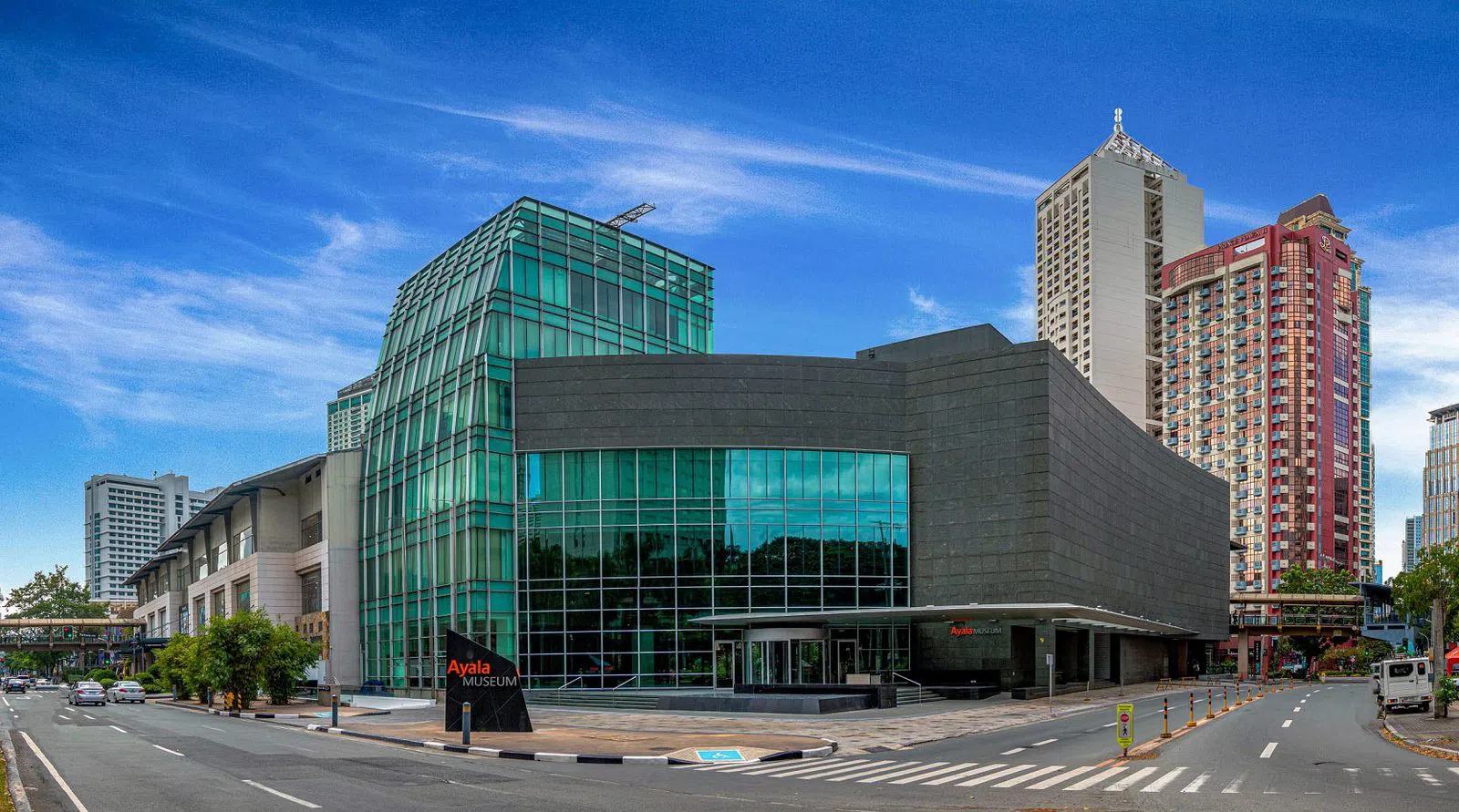
In Makati, the Ayala Museum (Makati) does the same job from a different angle: an hour inside gives an arriving visitor more Philippine context than a day of wandering. Entry is PHP 425 for adults, open Tuesday to Sunday 10am to 6pm, closed Mondays, and guided or school-group visits can be booked in advance.
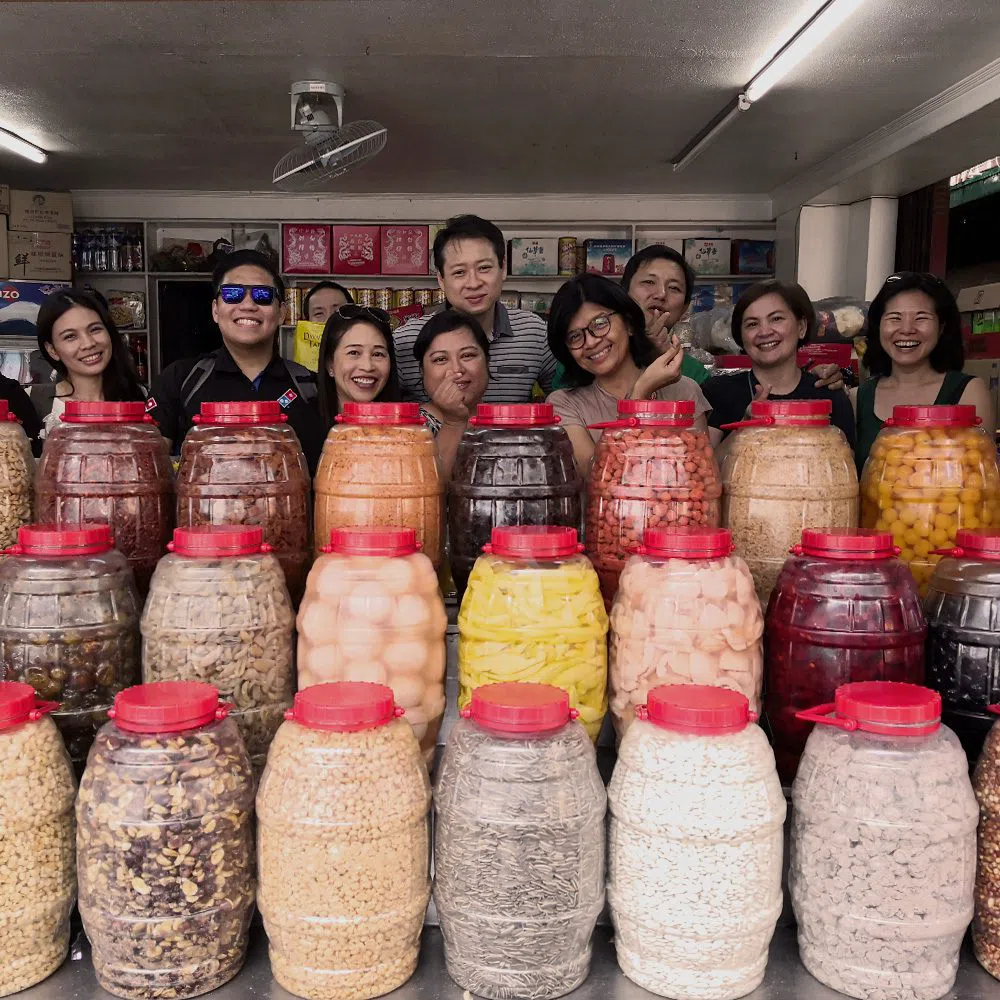
If you would rather eat your history, Old Manila Walks (Binondo) runs a Binondo food walk from Binondo Church at 9am: PHP 1,400 per person, all the food included, three and a half hours. Ivan Man Dy has been running these for over twenty years, and the route hands you the oldest Chinatown in the world, founded in 1594, along with breakfast. Groups are small by design; private departures are arranged on request.
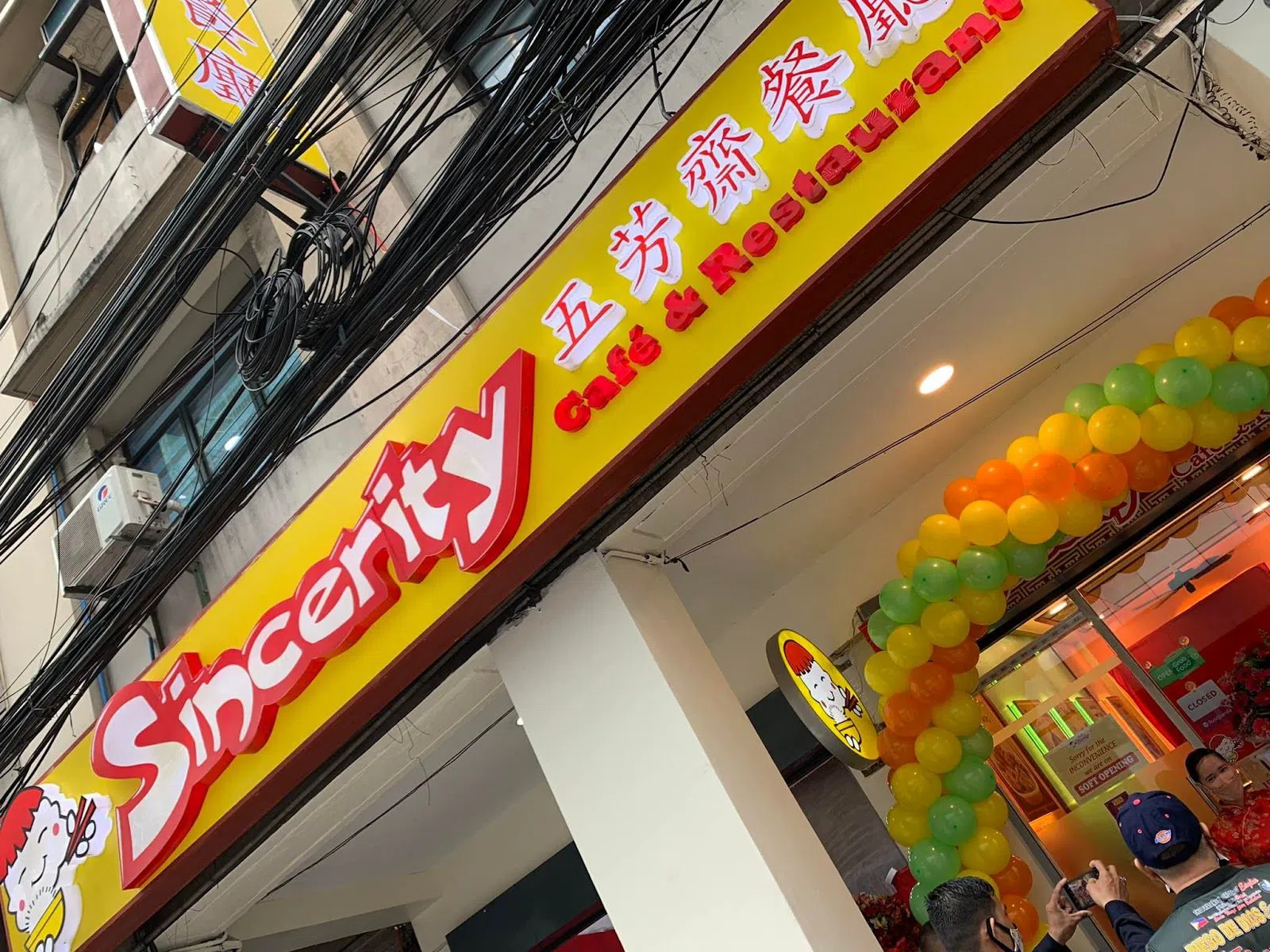
In the same streets, Sincerity Cafe and Restaurant (Binondo) has been trading since 1956 and is still the fried chicken everyone in the district means when they say fried chicken. It runs PHP 300 to 600 a head, is no-frills and busy, and closes in the early evening, so treat it as lunch rather than dinner. Small groups are seated fast; larger ones should split tables or use the Lucky Chinatown branch.
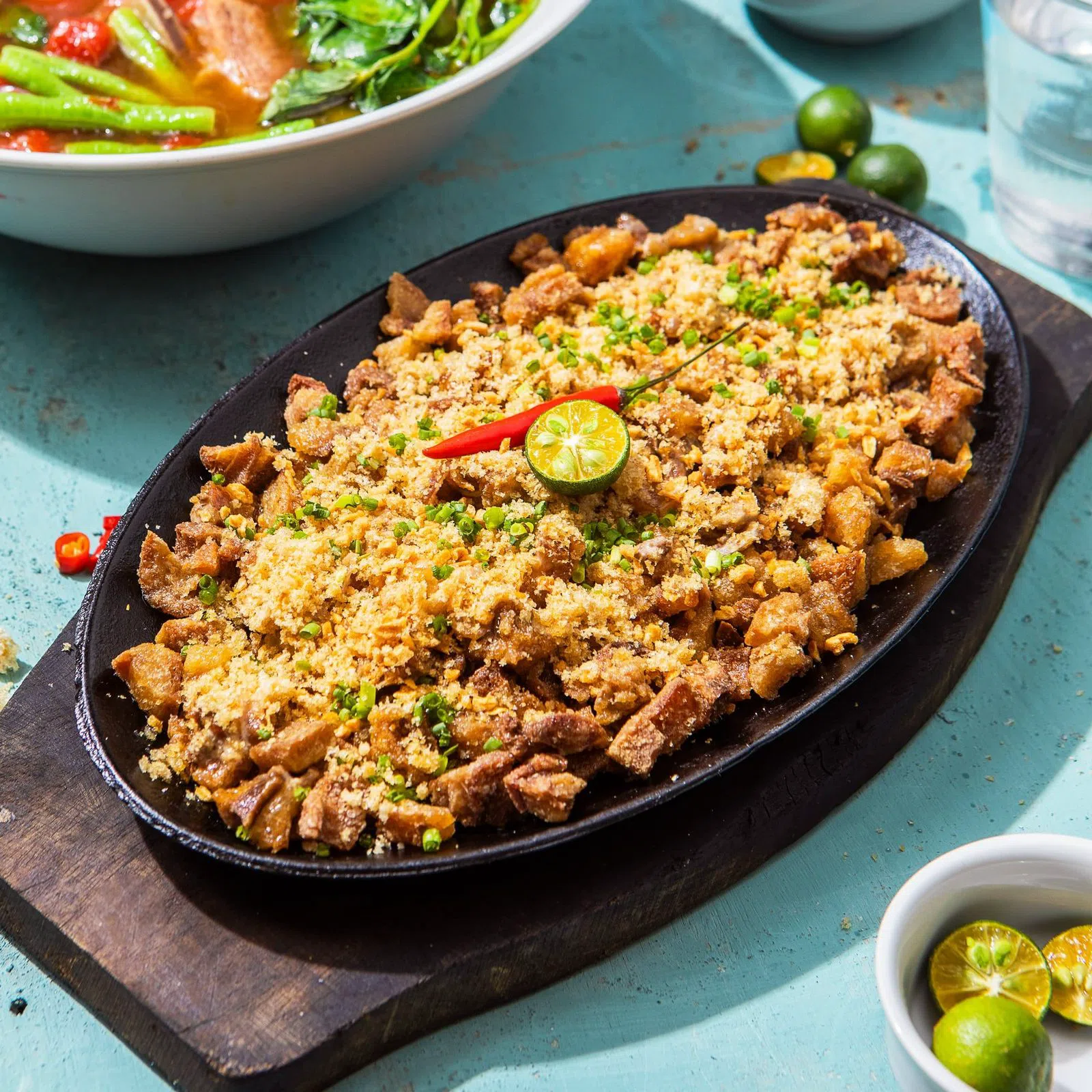
If your first Filipino meal has to work for people who have never had one, Manam Comfort Filipino (Greenbelt, Makati, with branches in BGC and Mall of Asia) is the reliable answer. Dishes come in small and large sizes so a table can taste widely without over-ordering, most nights the branches seat groups without a reservation, and PHP 600 to 1,000 a head covers it comfortably.
Practical notes for the first 24 hours
Transport is entirely a road problem, because no rail line serves the terminals. Use a ride-hailing app or the official metered taxi queue at the terminal, and agree to nothing unmetered from a driver who approaches you inside the hall. Judge distances in minutes, never kilometres, and add half an hour to anything crossing a rush hour.
Carry pesos. Hotels, malls and the resorts take cards without fuss, but Fort Santiago, Casa Manila, tricycle and jeepney rides and most Binondo counters want cash. Airport ATMs charge a flat fee per withdrawal, so take one larger amount rather than three small ones.
Watch the closing days. Mondays close Casa Manila, the National Museum of Fine Arts and the Ayala Museum; the San Agustin museum is closed Mondays and Tuesdays. Saturday mornings at San Agustin belong to weddings. Fort Santiago's 10pm weekday closing, with last entry at 8pm, is the safety net for a delayed flight.
On budget, a lean but complete first day (the Bambike tour, Fort Santiago, lunch at Sincerity and a drink at sunset) lands around PHP 3,500 per person before your room. The comfortable version, with a night at The Manila Hotel and dinner with a show, sits closer to PHP 12,000 to 18,000. A layover version, using the transit tour and a capsule instead, comes in under PHP 6,000 all in.
Two days is the honest minimum for Manila before you move on to the islands, and the plan above spends the first of them properly. When you are ready to fill the second, the Manila guide picks up where this leaves off.
Before you go
How long does my layover need to be to leave Manila airport?
The DOT Transit Tour Program at NAIA Terminal 3 requires a layover of eight hours or more, plus visa-free entry or a valid visa, and costs about USD 50 per person for four hours with guide, entrance fees, insurance and police escort included. On your own, the maths is the same: immigration, a road trip each way and rush-hour risk mean anything under six hours is not worth the gamble.
Can I sleep and shower without leaving the airport?
Yes. The Wings Transit Lounge inside NAIA Terminal 3 resumed full operations in July 2026 and charges roughly PHP 1,500 to 4,000 for a 7.5 to 15-hour stay, capsule or private room. Walk-ins and non-flying visitors are accepted, but every bed is booked individually from 24 hours to 60 days ahead. There is no block-booking desk, so a group needs one reservation per person.
I land at 4pm. Is there anything left worth doing?
Go straight to Intramuros and skip everything else. Fort Santiago is open until 10pm on weekdays with last entry at 8pm, which makes it the one major sight a late-afternoon arrival can still reach, and entry is PHP 75. Book the 4pm first seating at the Sky Deck View Bar at The Bayleaf Intramuros if you want the sunset, then eat nearby and sleep in the walled city.
Which Manila museums close on Mondays?
Casa Manila, the National Museum of Fine Arts and the Ayala Museum are all closed Mondays. Museo San Agustin is closed both Mondays and Tuesdays, though the church itself stays free and open. If you land on a Sunday night, plan Monday around Fort Santiago, Binondo and the bay side rather than around galleries.
How much cash should I carry for the first day?
Around PHP 3,000 to 4,000 per person covers a full first day of entries, a bike tour, lunch in Binondo and taxis, since Fort Santiago, Casa Manila, tricycles and most Binondo counters are cash-only. Hotels, malls, Newport World Resorts and Okada Manila all take cards. Airport ATMs charge a flat fee per withdrawal, so make one larger withdrawal rather than several small ones.