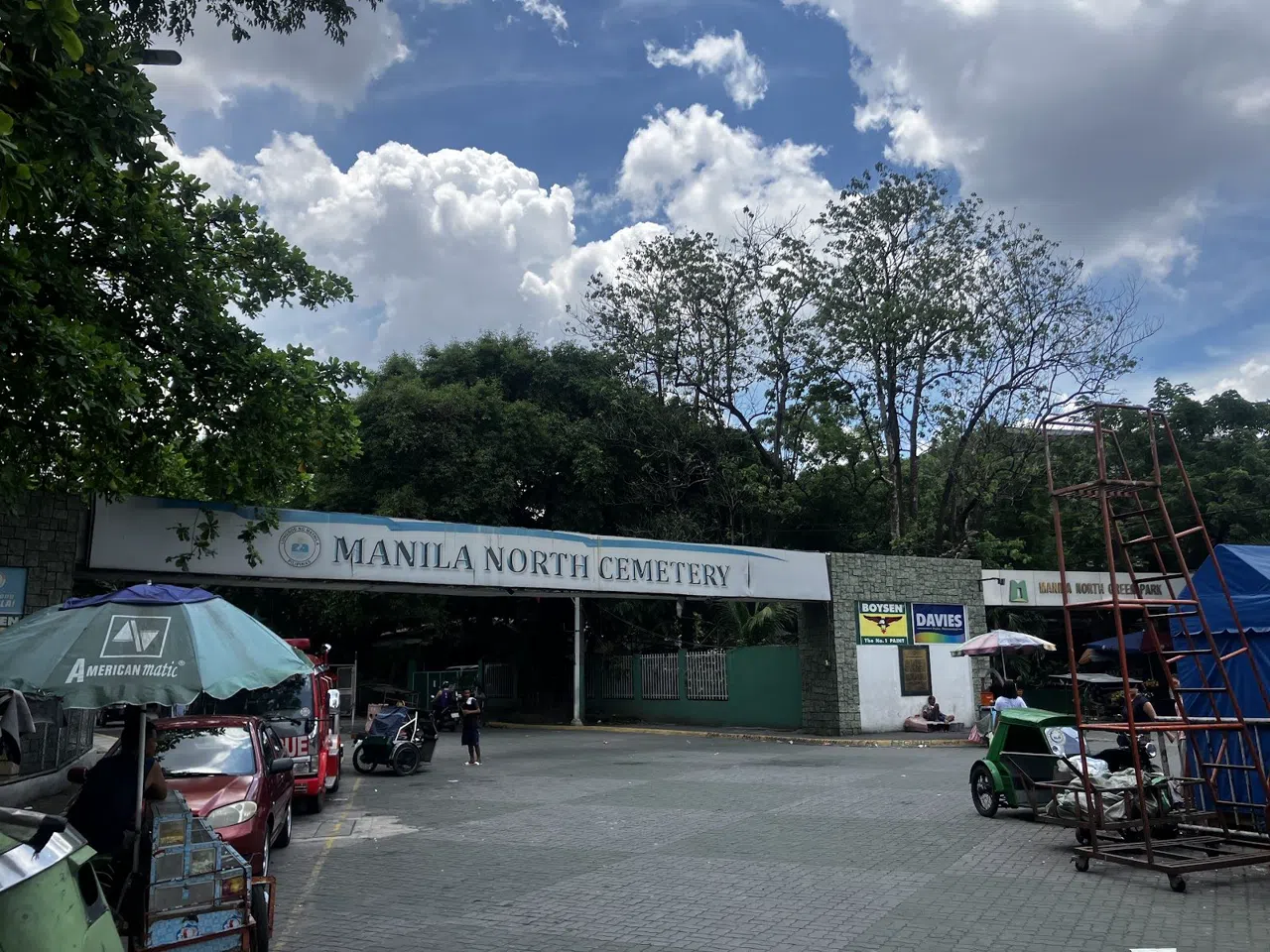

Every year on the last night of October, hundreds of thousands of Manileños carry folding chairs, mahjong sets, and coolers of San Miguel through the gates of a cemetery and set up camp beside their dead. By midnight the graves are lit end to end with candles, the air smells of grilled pork belly and melted wax, and children fall asleep on tombstones while their grandparents play cards until dawn. This is Undas — All Souls' Day, and its eve, All Saints' Day — and nowhere in Asia does mourning turn into spectacle quite the way it does inside Manila's old North Cemetery.
Paco Park: where the tradition starts
Start a day or two before the crowds arrive, at Paco Park (Paco), the walled circular garden just south of Ermita. It began as a municipal cemetery, its double ring of niche walls completed in 1822 to bury victims of a cholera epidemic that had overwhelmed the city's older graveyards. José Rizal was interred here in secret after his 1896 execution, before his remains were exhumed two years later. The colonial-era overcrowding that forced this cemetery's construction is the same pressure, decades later, that pushed the city to open La Loma and then North Cemetery — Paco is the root of everything that follows. Entrance runs roughly PHP 5–20, it's open to the public year-round, and at this time of year it's the calm before the noise: no candles, no crowds, just stone walls and the epitaph niches that gave Manila its first taste of formal cemetery culture.
The North Cemetery: Manila's all-night necropolis
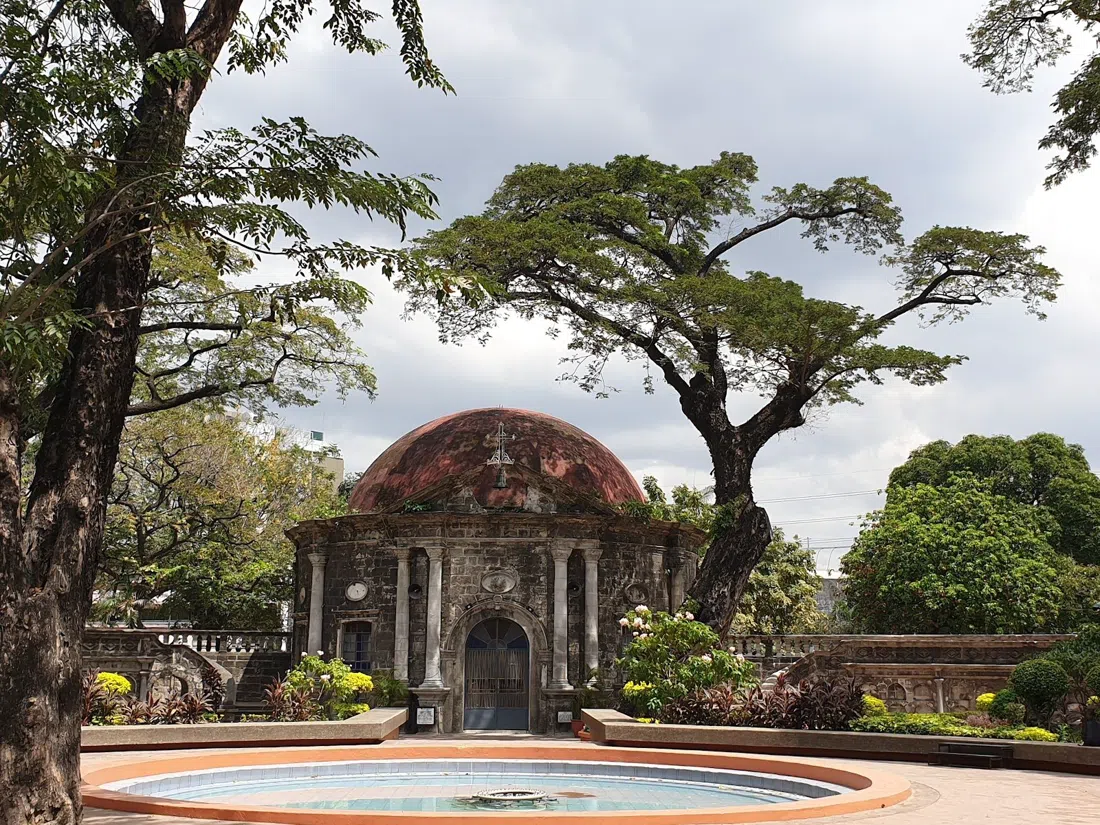
Manila North Cemetery (Santa Cruz, on Blumentritt Road near the LRT-1 Abad Santos and Blumentritt stations) is the centerpiece for a reason. Opened in 1904, it's less a graveyard than a self-contained city: narrow alleys lined with mausoleums built like houses, some occupied year-round by caretaker families, a few even wired for electricity. For the rest of the year it's simply Manila's largest public cemetery. For 48 hours around November 1, it becomes the biggest open-air gathering in the city.
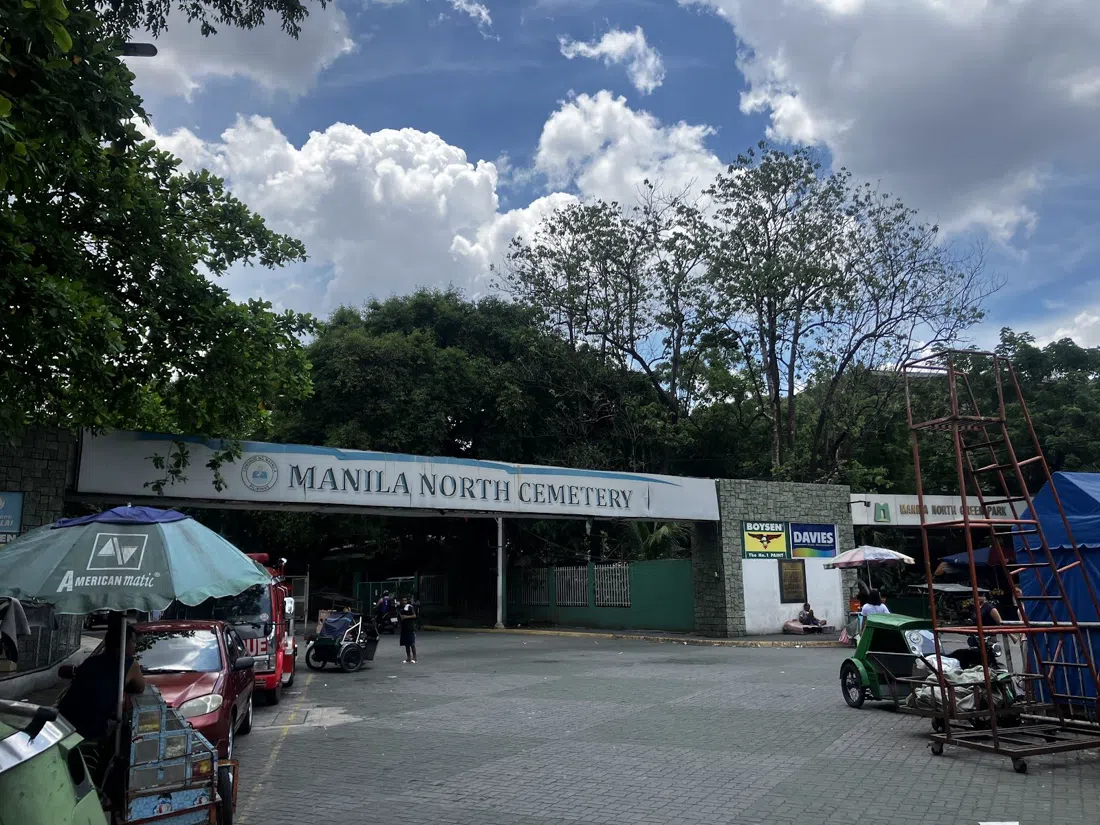
Entry is free and nobody books ahead — North Cemetery absorbs entire extended families and organized parish groups without a queue system. What you're walking into: tarpaulin shelters strung between tombs, generators for the karaoke machines, food stalls selling barbecue and balut, and candlelight radiating from literally every grave as far as you can see. Vendors just inside the gates sell candles and flowers for roughly PHP 20–300 — buy there rather than from anyone offering a "discount" outside the walls. Go in comfortable shoes you don't mind losing to wax and candle drippings, carry small bills, and expect it to be loud, dense, and genuinely joyful rather than solemn — Filipino Undas is a reunion with the dead, not a vigil of quiet grief. If you want to see the fairground at its fullest, arrive as the light goes at dusk on October 31 and let the crowd build around you.
The Chinese Cemetery: mausoleums with kitchens
Next door sits the Manila Chinese Cemetery (Santa Cruz, adjoining North Cemetery), and it's the single strangest, most photogenic thing on this itinerary. Established in the 1850s after the Spanish colonial administration refused Catholic burial to the city's Chinese community, it developed along completely different lines from its Catholic neighbor: mausoleums here were built as actual houses for the wealthy Chinese-Filipino families who commissioned them, with air conditioning, marble floors, bathrooms with running water, and — the detail that startles first-time visitors — full kitchens. Undas is the one period when those kitchens actually get used, as families cook meals for the dead inside their own tombs. Entry is free and open to the public.
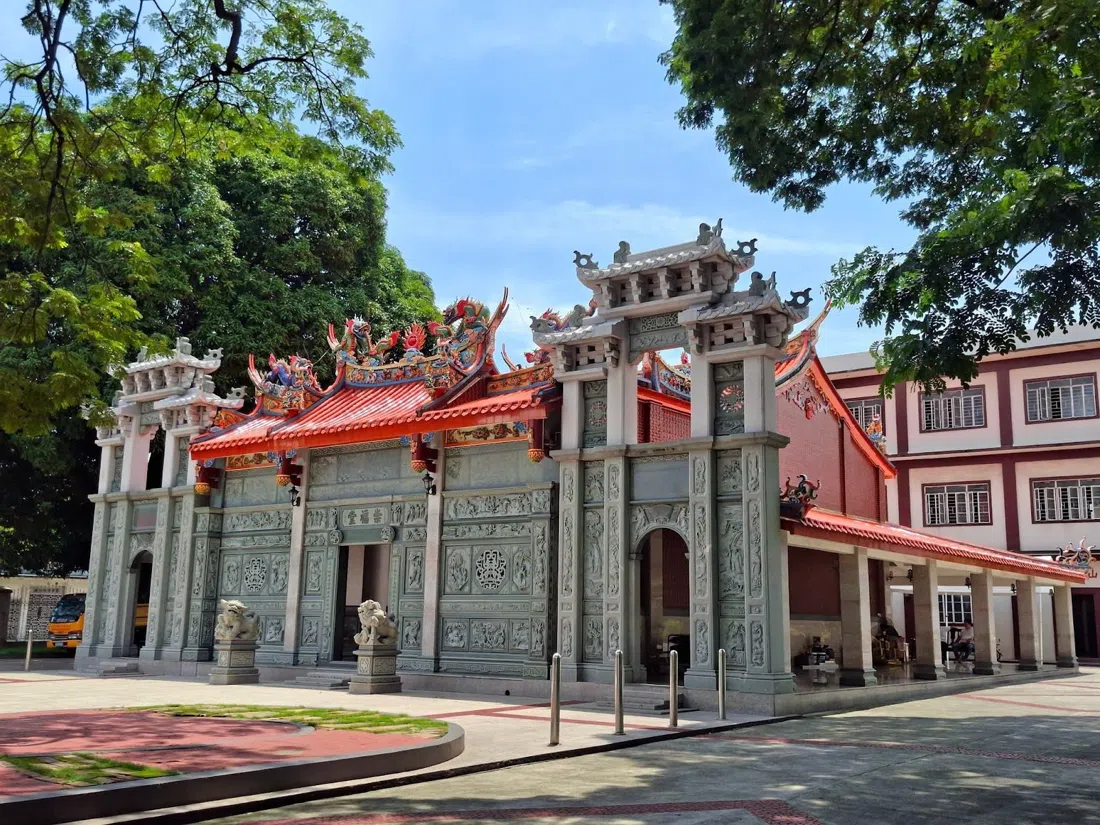
The scale and the unfamiliar layout — some sections resemble a suburb more than a graveyard — reward a guide. Old Manila Walks (Ivan Man Dy) runs a Chinese Cemetery walking tour that turns two hours of wandering into a proper history lesson: how the cemetery came to exist outside Catholic jurisdiction, who's buried in which mausoleum, and why the architecture escalated the way it did. It takes private and small groups of up to roughly 15 people, runs around PHP 1,500–2,000+ per person for a half-day, and books out during Undas week — reserve at least a week ahead if you want a slot on October 31 or November 1. If you'd rather book directly through the cemetery, guided tours there run roughly PHP 1,500–2,500 per person.
South Cemetery and La Loma: two calmer old-city options
If North Cemetery's crush isn't for you, or you want a second stop without the same intensity, Manila South Cemetery (an exclave of San Andres, Manila, surrounded by Makati) runs the identical city vigil — same free entry, same welcome for large families and groups — at noticeably lower density. It's the better first stop for anyone unsure whether they want the full North Cemetery experience.
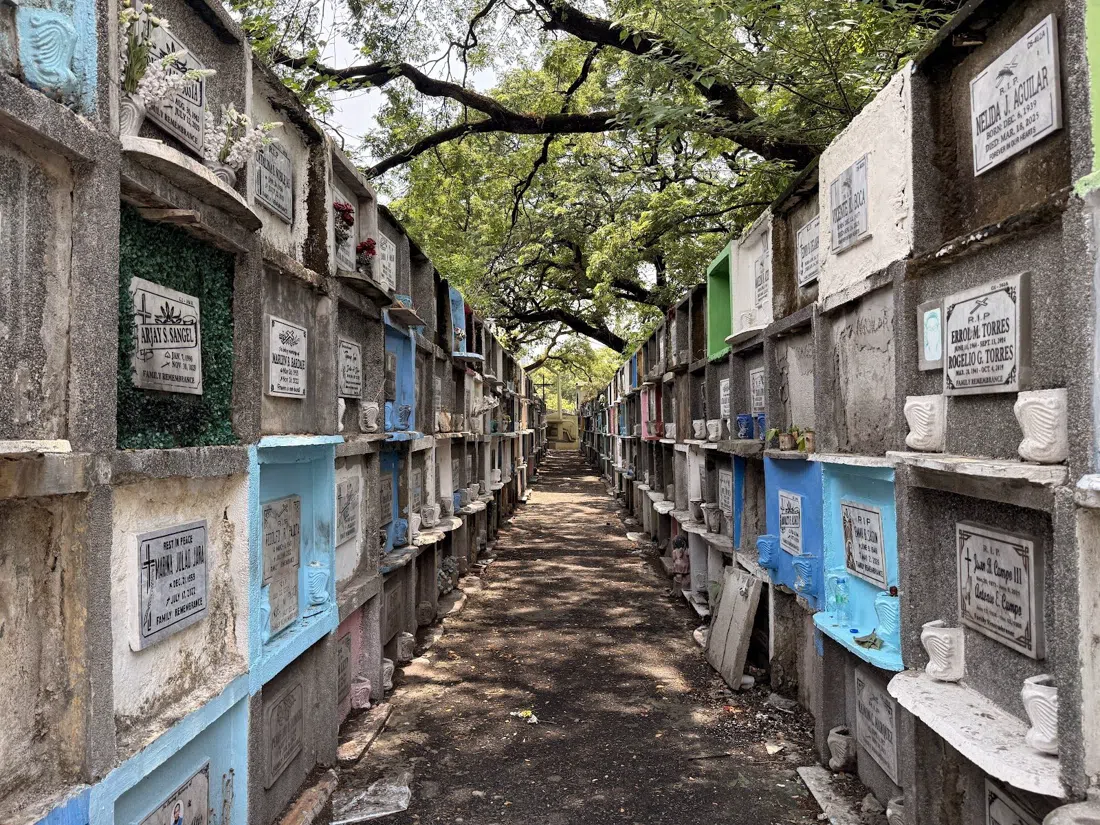
La Loma Cemetery (straddling the Manila–Caloocan boundary at Grace Park) is worth the detour for a different reason: it's Manila's oldest operating cemetery, established in 1884 as an overflow site after the same overcrowding that had already forced Paco's construction decades earlier. Its layout — rows of family mausoleums radiating from a central chapel — became the template every later Manila cemetery, including North Cemetery, copied. Family and group visits are completely normal here during Undas, though parking is tight; walk or grab-hail in rather than trying to drive yourself.
The modern memorial parks: easier logistics, different mood
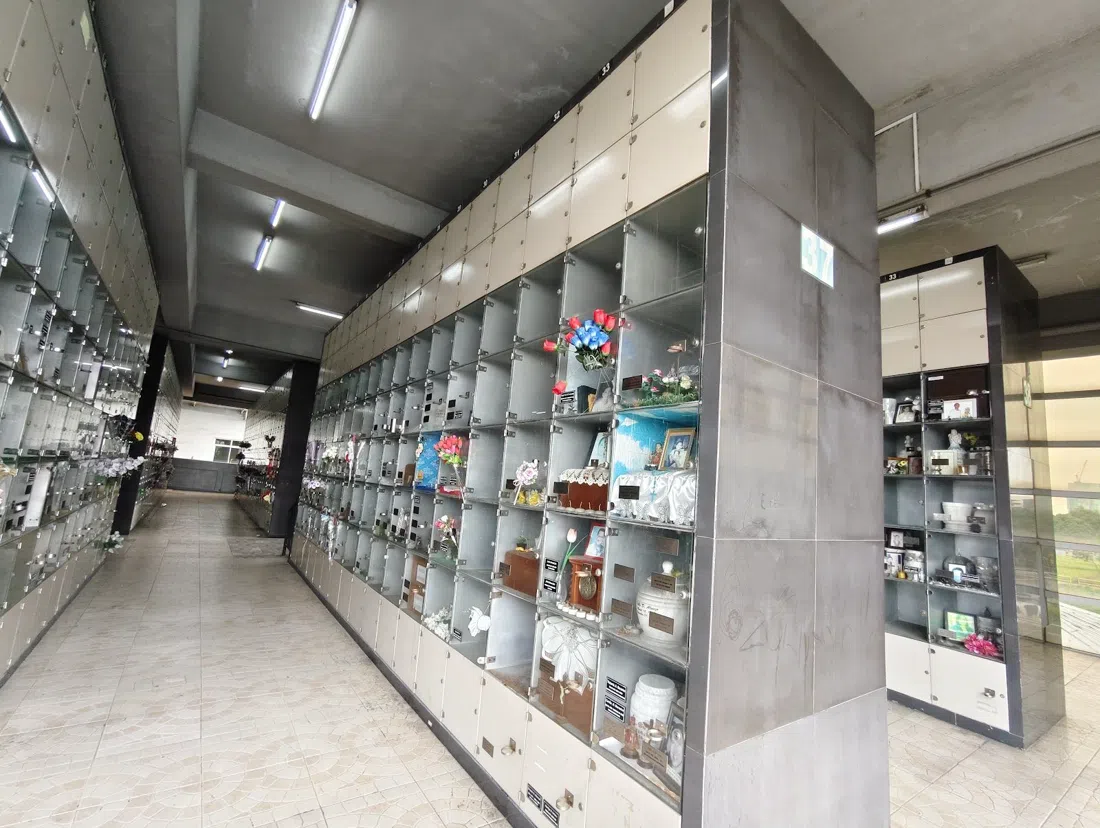
For visitors who want the candlelight without the mausoleum-city density, four American-style lawn cemeteries around the metro offer a gentler version of the same night.
Loyola Memorial Park, Marikina trades North Cemetery's cramped alleys for open lawns dotted with flat markers — by dusk the effect is a literal carpet of candles rather than a wall of them. Large groups and extended families are the norm, and the park runs organized parking, which matters more than it sounds on Undas weekend.
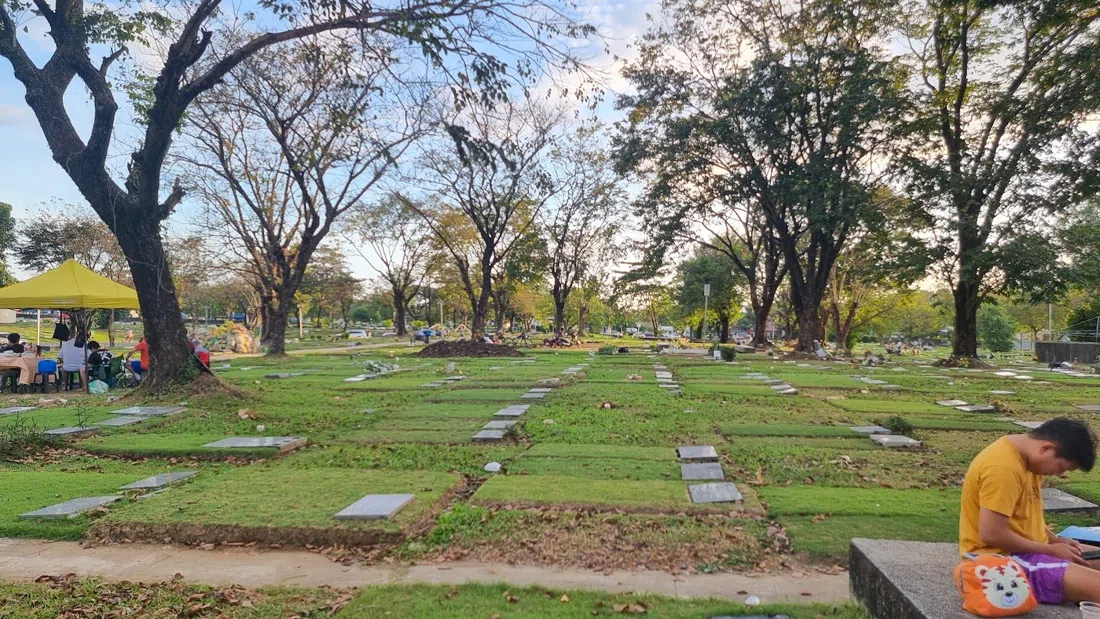
Himlayang Pilipino Memorial Park (Tandang Sora, Quezon City) sits on rolling hills in Barangay Pasong Tamo — greener and quieter than anything closer to the old city center. On peak Undas days the park switches to a manual entry form rather than free-flow access, so budget a few extra minutes at the gate. Once night falls, the hillside candle views are genuinely dramatic.
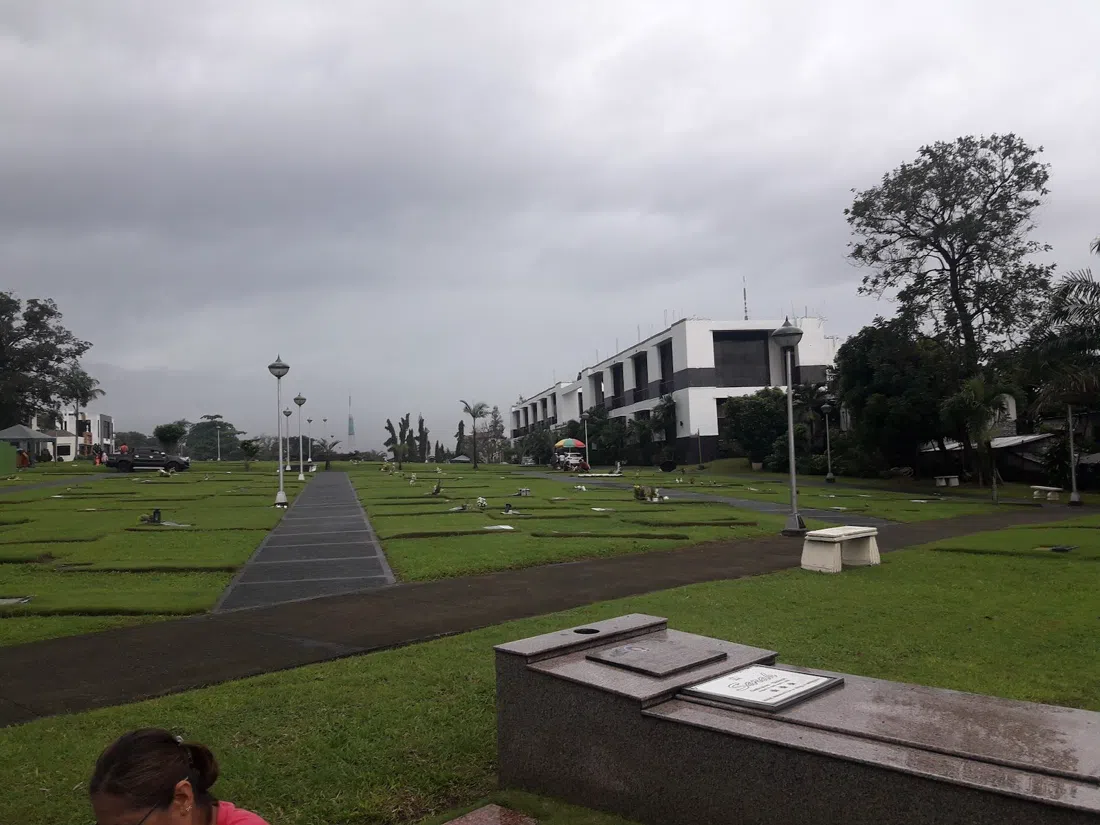
Heritage Park (Bayani Road, Lower Bicutan, Taguig, inside the old Fort Bonifacio grounds near BGC) is the most polished and easiest to reach if you're staying near Bonifacio Global City or Makati — structured road access, no need to fight through the old city's Undas traffic to get a candlelight vigil experience.
Manila Memorial Park, Sucat (Dr. A. Santos Avenue, Parañaque) is the rare park with genuine round-the-clock access on the two nights — local authorities extend it to a full 24 hours specifically to spread out the roughly one million visitors it draws over the period, so if you want to see the vigil carry through until sunrise without the gates ever closing, this is the one.
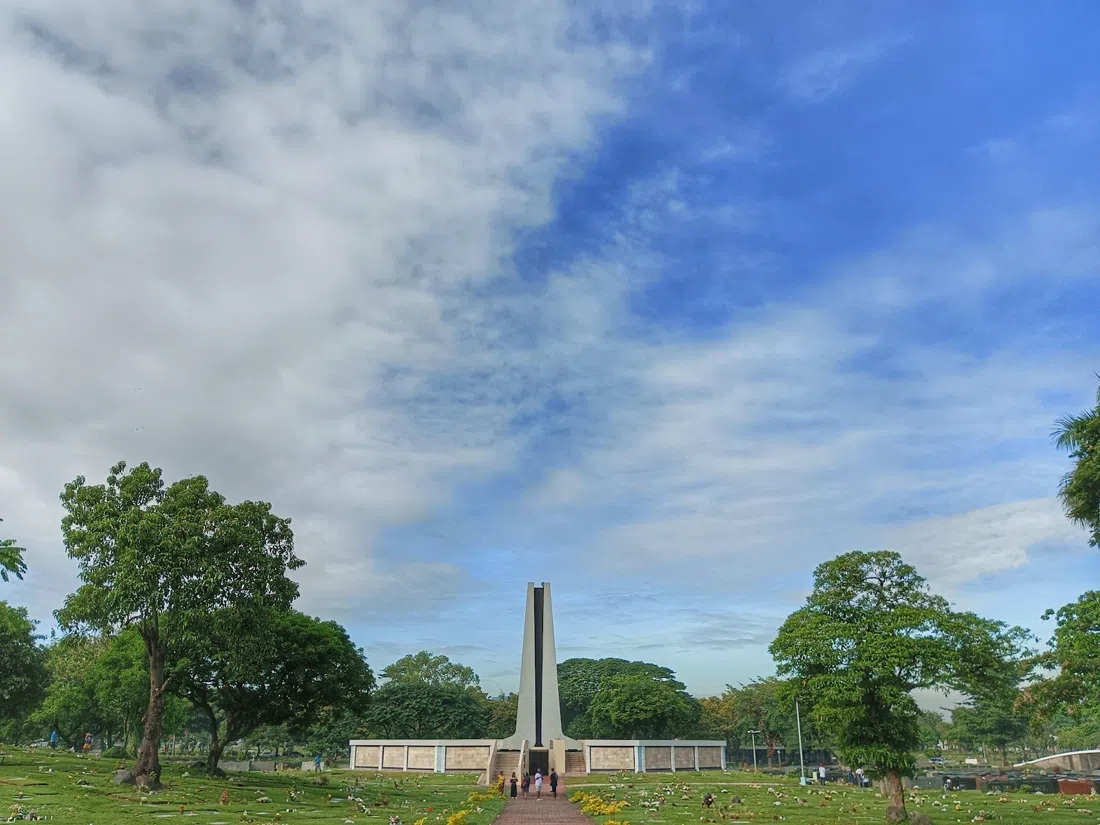
All four are free entry, and all four are built for cars and large groups — expect ample, if crowded, parking rather than North Cemetery's pedestrian scrum.
Libingan ng mga Bayani: the hushed counterpoint
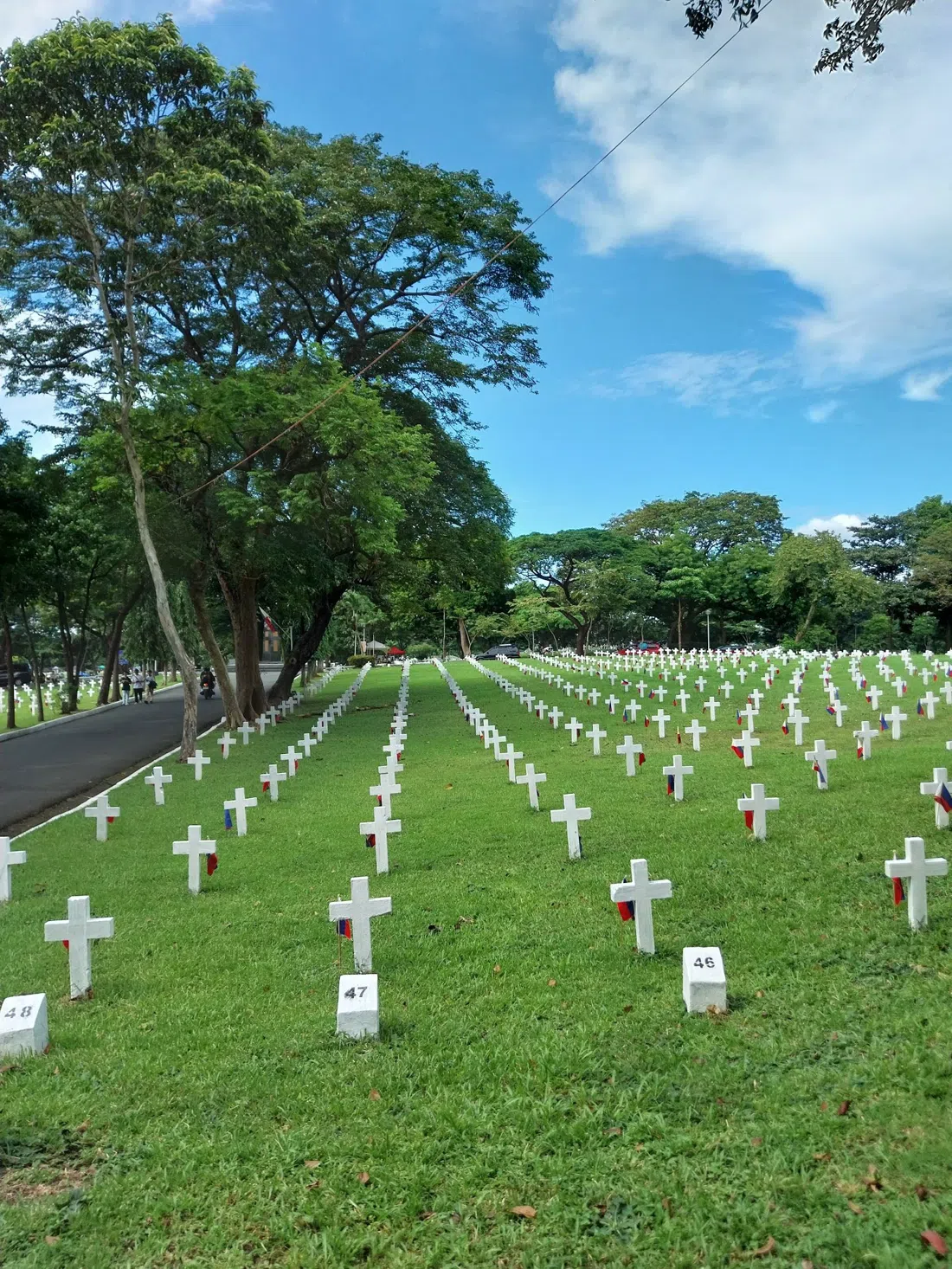
For contrast, cross to Libingan ng mga Bayani (Fort Bonifacio, Taguig), the national military cemetery established in 1947 and renamed in 1954, where Filipino soldiers, national heroes, and several former presidents are buried around the Tomb of the Unknown Soldier. It's open to the public and to organized tours, and entry is free — but the register is entirely different from anywhere else on this list. Modest dress is required, alcohol, drones, and pets are all barred, and the mood is formal and quiet rather than festive. Seeing this cemetery on the same day as North Cemetery is the clearest way to understand that Undas isn't one single thing in Manila — it's a spectrum from fairground to state solemnity, and both are entirely normal expressions of the same holiday.
Provisioning for the night: Dangwa Flower Market
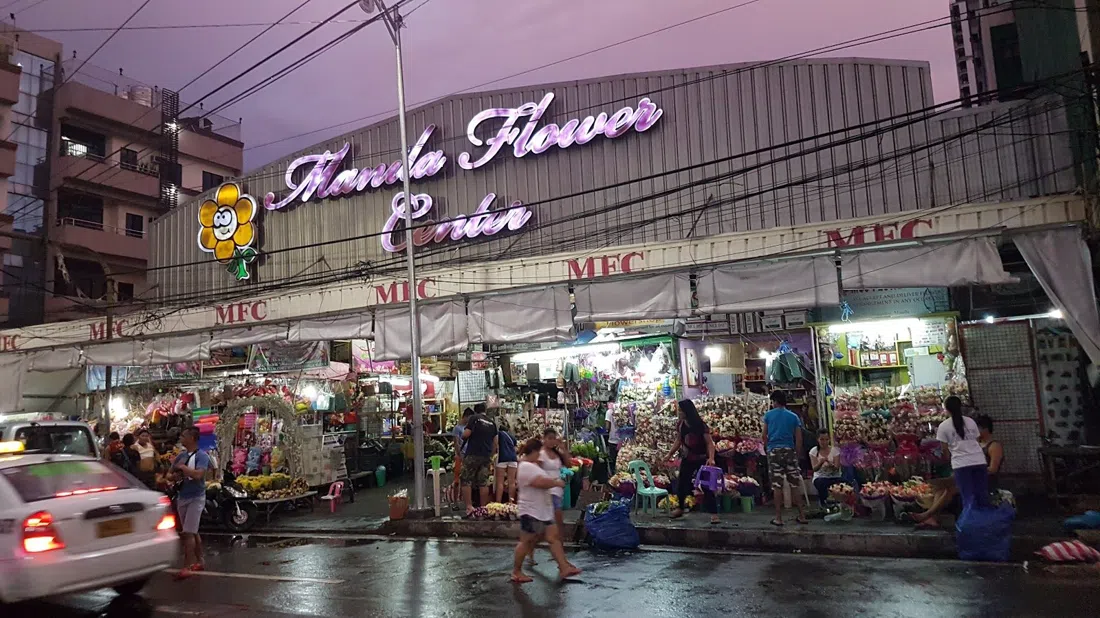
Before any of this, Manila shops at Dangwa Flower Market (centered on Dos Castillas Street at Dimasalang Road, Sampaloc), the open-air flower district that's supplied the city's cemeteries since the 1970s, when a handful of vendors set up beside the Dangwa Tranco bus terminal to sell blooms trucked in from Baguio. It's grown to more than 150 stalls, and it's exactly where the candles and sampaguita garlands piled on North Cemetery's graves actually come from. It's fine to wander and photograph as a visitor, and flower bundles run roughly PHP 100–300 — but that price climbs sharply as November 1 approaches. Go two or three days ahead, around October 28–29, to see the market at full, chaotic capacity before the pre-Undas markup sets in.
Getting there, timing, cash, and budget
Transport: Metro Manila's roads around EDSA and Rizal Avenue seize up badly on October 31 and November 1 — assume anywhere near North or Chinese Cemetery is faster reached by LRT-1 to Abad Santos or Blumentritt station and a short walk than by car. Grab fares surge hard on both nights; book early if you're relying on it for the outer memorial parks. If you're staying near BGC or Makati, Heritage Park and Manila South Cemetery are the least painful options logistically.
Cash: bring small bills. Candle and flower vendors at every cemetery gate, and the stalls inside North Cemetery, are cash-only.
Timing: the vigil builds through the afternoon of October 31 and peaks from roughly 8pm to midnight; most cemeteries stay open and populated well past that, with Manila Memorial Park in Sucat running a genuine 24-hour gate on both nights. Arrive at North Cemetery before dusk if you want to watch families actually setting up, rather than walking into a crowd already at full density.
Budget: most cemeteries here are free to enter; candles and flowers run PHP 20–300; a guided Chinese Cemetery walk runs PHP 1,500–2,500 per person, or PHP 1,500–2,000+ per person booked privately through Old Manila Walks; Paco Park is PHP 5–20. For a base to work from, browse Manila hotel search — somewhere near Ermita or Makati keeps every cemetery on this list within a reasonable Grab ride. For the rest of the city beyond Undas week, the Manila guide covers it.